Guide · 7 min read
A Guide to Modern Thai Tapas: Elevating Bangkok Street Food
By Chef Pond & Chef Toei — MasterChef Thailand Season 3 finalists, Khaosan Tapas Bar, George Town.
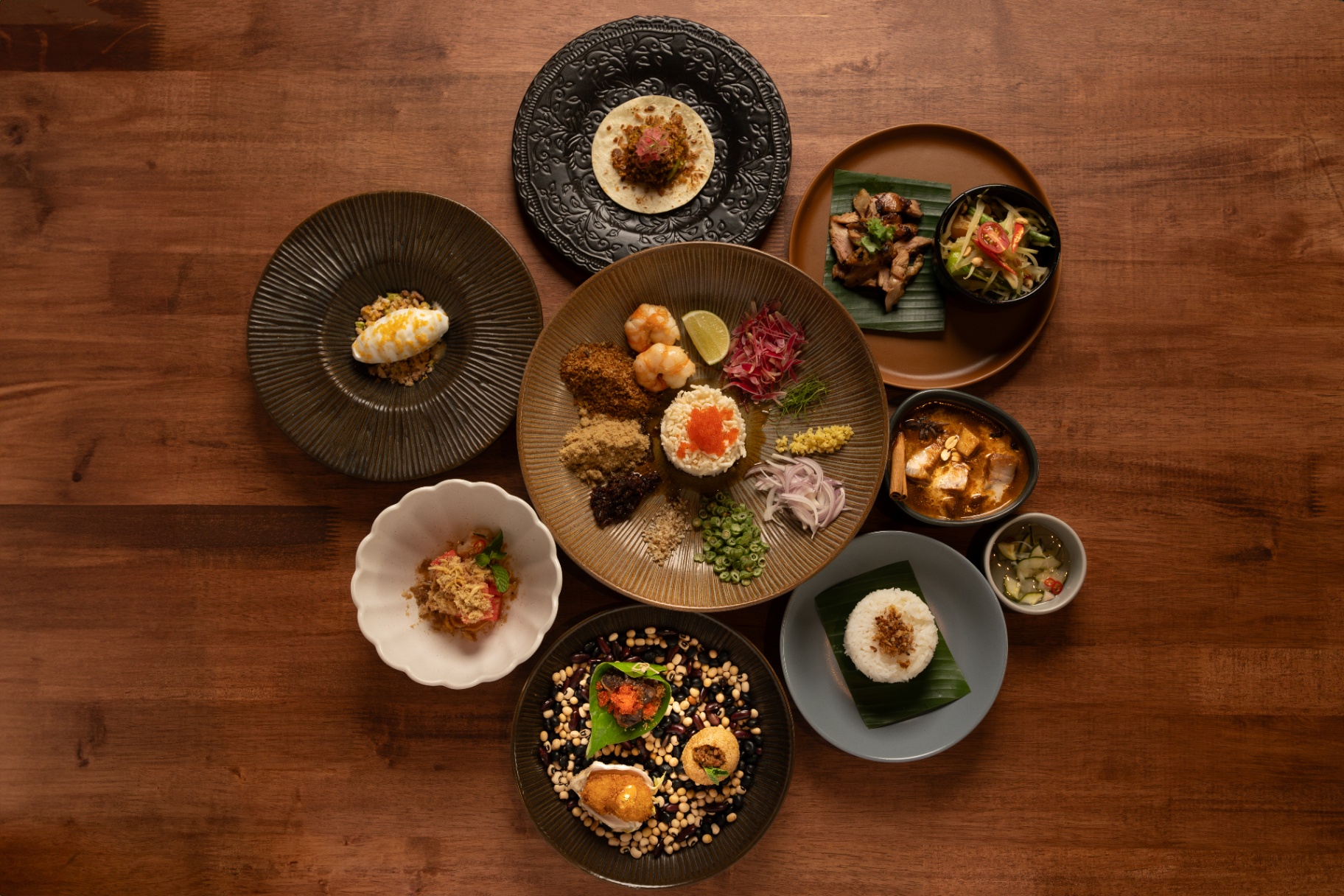
What is Thai tapas?
"Thai tapas" is shorthand for a way of eating, not a fixed menu. It takes the small-plate logic of a Spanish tapas bar — order four or five things, share, pair with cocktails — and runs it through the flavour vocabulary of Bangkok street food: chilli, lime, fish sauce, palm sugar, charred protein, raw herbs.
The plates stay small on purpose. A street vendor on Khaosan Road cooks one dish well; a tapas kitchen lets you taste eight in a sitting. That's the bridge we built at Khaosan: stall-style cooking, bar-style service.
From Khaosan Road to Campbell Street
Bangkok street food is high-volume cooking — wok-fired, chargrilled, assembled in front of you. The flavours are loud and direct. Modern Thai tapas keeps that intensity but trims the portion, sharpens the plating, and pairs each plate with a drink built for it.
What changes is composition, not ingredients. We still buy palm sugar by the slab, pound our own curry pastes, and ferment our own sausages. What's different is that a single bite has to carry the whole dish.
Five signature plates, decoded
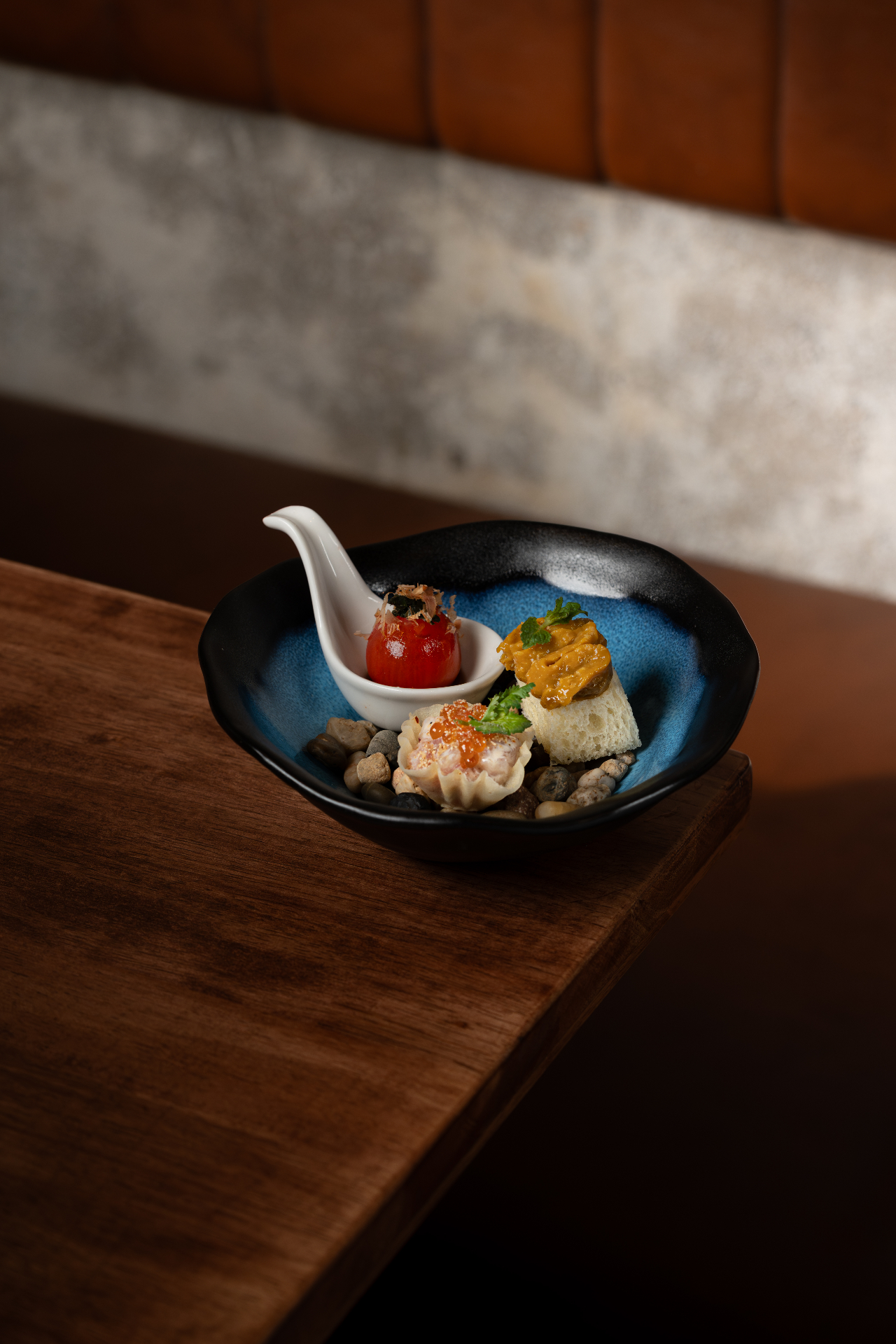
Kerang Miangkam — Betel Leaf Parcels
Miang kham is a centuries-old Thai snack: a betel leaf folded around toasted coconut, ginger, lime, chilli, dried shrimp and a drop of palm-sugar syrup. We swap dried shrimp for fresh cockles and tighten the sauce so the parcel holds its shape on the plate. One bite delivers sweet, sour, salty, bitter and hot — the Thai five-taste rule, in a leaf.
Kuagling Taco — Southern Chilli Paste
Kua kling is a dry-fried minced-meat curry from southern Thailand — turmeric, lemongrass, bird's-eye chilli, no liquid. Traditionally eaten with rice; we plate it on a crisp tortilla with pickled cucumber so the heat lands in three-bite portions. Chef Pond's signature plate.
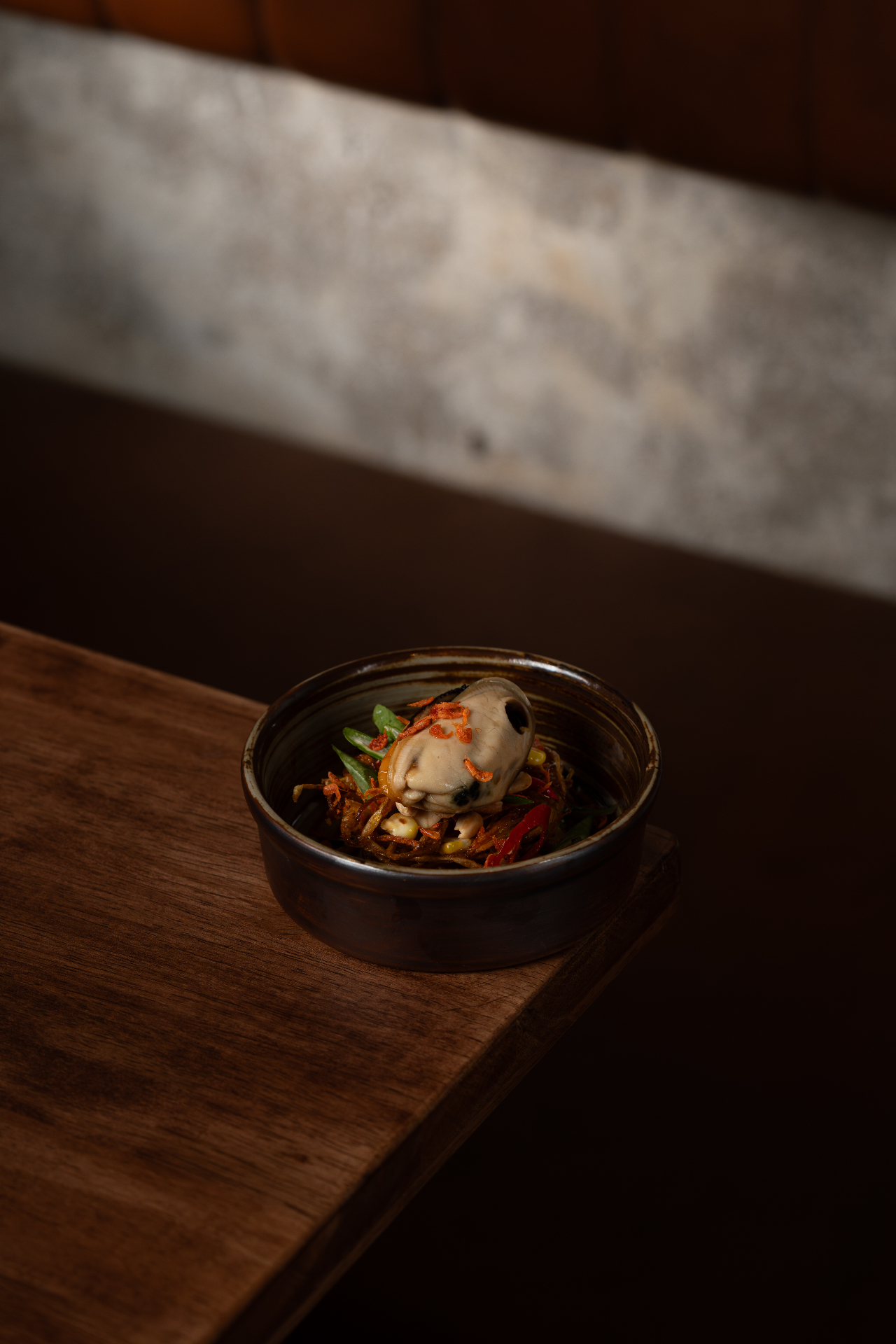
Hoi Tod — Crispy Oysters
A Bangkok night-market classic — oysters in a thin egg-and-rice-flour batter, shallow-fried until lace-edged. We serve them bite-size with a sriracha mayo so the briny pop of the oyster still leads. Order with a Singha or a clarified BKT cocktail.
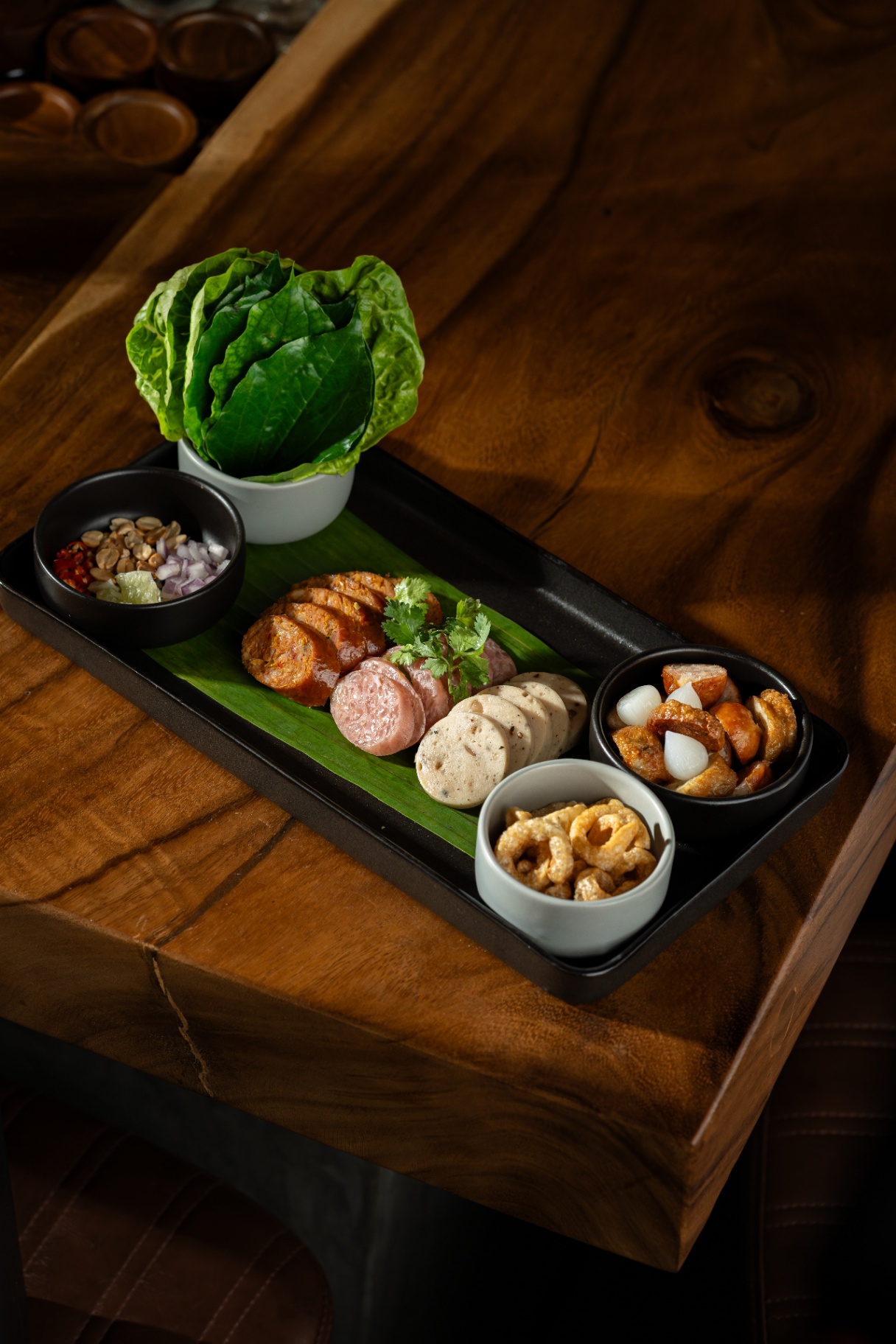
Larb Kua — Isaan Pork Salad
Larb is the national dish of Laos and northeast Thailand: minced meat dressed in lime, fish sauce, toasted rice powder and roasted chilli. Our version is dry-fried (kua) for a deeper, smokier base, with a sliver of liver for richness. Eat it in baby romaine cups like a hand-roll.
Som O — Pomelo & Prawn
The Thai cold-prep answer to ceviche. Pomelo segments tossed with chilli jam, toasted coconut, fried shallots and a poached prawn. Built to wake up the palate between heavier plates.
How to order a Thai tapas meal
- Plan two cold/raw plates, two hot, one grill, one rice or noodle.
- Order something fermented (sausage, larb) and something fresh (pomelo, papaya) — they balance each other.
- One chilli-forward plate per two people; Thai heat builds, it doesn't level off.
- Cocktails over wine for the spicier plates — clarified, low-sugar builds cut through fish sauce better than tannin.
Why two MasterChef finalists, in Penang
We met in Bangkok during MasterChef Thailand Season 3 — the country's most-watched cooking competition and a Nataraja Award winner. George Town offered something Bangkok couldn't: a heritage shophouse, a six-seat bar, and a diner who'd already travelled for char kway teow and was ready to travel for kua kling too.
Modern Thai tapas is what happens when you stop choosing between street food and fine dining and just cook both at once.